If you work in enterprise architecture, you almost certainly use one of the established EA platforms. LeanIX, Ardoq, Bizzdesign, MEGA HOPEX — these tools have earned their place. They are genuinely good at what they do: mapping your application landscape, tracking technology lifecycles, visualising dependencies, and giving your team a shared repository of architecture facts.
The market for these tools reflects how seriously organisations take this work. The EA tools market was valued at $1.19 billion in 2025 and is projected to reach $2.22 billion by 2035 — growth driven by rising IT complexity, digital transformation programmes, and increasing cloud dependency. Yet the same research found that 36% of organisations cite outdated data as their primary challenge with EA tools, and 29% cite adoption resistance. Significant investment, unresolved problems.
cajeX is not a replacement for any of them. We are not trying to be better at portfolio mapping than tools that have spent a decade building exactly that. We are doing something different — and that difference is worth understanding precisely if you are evaluating where governance gaps actually live in your organisation.
The Map Is Not the Governance
Every established EA tool is, at its core, a documentation and visualisation platform. It helps you see your landscape. It helps you understand your portfolio. It tracks what exists, what is being decommissioned, what depends on what. That is genuinely valuable work.
But there is a difference between having a map and having governance. Governance is not the documentation of what your standards are. Governance is the enforcement of those standards against the decisions being made right now — the project that chose the wrong database, the procurement that introduced a new vendor outside your approved list, the microservice that bypassed an approved abstraction layer.
"What matters in 2026 is not whether a governance framework exists, but whether it can be continuously demonstrated."
— Zachman International, Enterprise Architecture in 2026: From Maps to Managed DecisionsA document that describes your standards is not the same as evidence that those standards were applied to a specific decision, on a specific date, by a named reviewer. The first is a policy. The second is governance.
The gap between documented standards and enforced ones is where most architecture governance programmes quietly fail. That gap is structural, not a failure of effort — it exists because the tools used to document standards were never designed to enforce them at delivery speed.
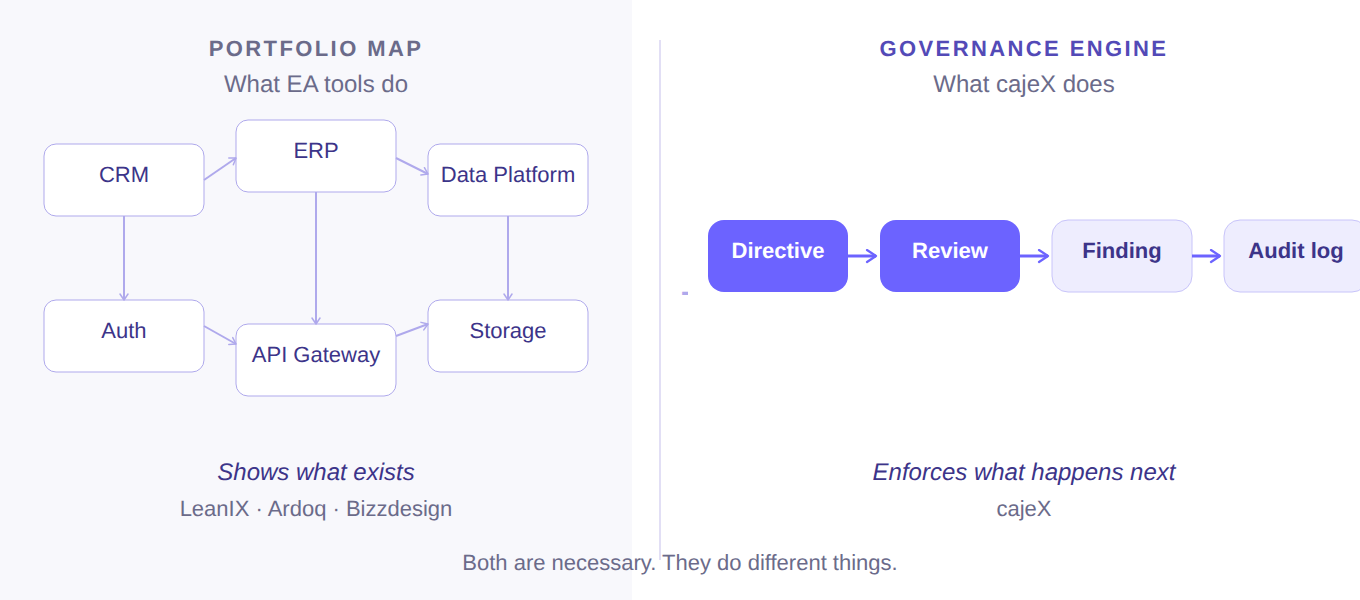
Figure 1 — Two different disciplines. Both necessary. Neither replaces the other.
What Traditional EA Tools Do Well
To be precise about the difference, it helps to be precise about what traditional EA tools are genuinely strong at.
LeanIX has made application portfolio management accessible in a way that older generation tools never managed. Its fact-sheet model is approachable, its integrations with SAP and ServiceNow are mature, and it is well-suited to the questions CIOs most commonly ask: which applications are redundant, which are approaching end-of-life, what does the landscape look like. In November 2023 SAP acquired LeanIX, deepening its position as the go-to choice for SAP-centric organisations.
Ardoq takes a graph-native, cloud-first approach that is particularly strong for dependency analysis and for organisations that want to understand how changes propagate across a complex system. Gartner Peer Insights rates Ardoq at 4.8 stars across 227 verified reviews — a signal of strong practitioner satisfaction, particularly around support and flexibility.
Bizzdesign and MEGA HOPEX go deeper into formal architecture frameworks. Both are strong for regulated industries that need TOGAF and ArchiMate support, and MEGA's 2024 merger with Bizzdesign created one of the most established platforms for governance, risk, and compliance modelling in the sector.
Where all of these platforms are weaker is in the governance enforcement layer: the mechanisms that check whether a project, system design, or procurement decision actually complies with the standards the architecture team has set, produce a structured finding if it does not, and create an auditable record of what was reviewed and what was decided.
Where the Gap Lives
In most organisations using traditional EA tools, the governance gap looks like this: a standard is documented in the EA platform, a decision is made in a standup or design conversation, a review is eventually requested, and by the time that review happens — weeks later — the team has already committed to the approach. The review confirms a decision that could no longer be changed without significant rework.
"In 2026, most organisations do not fail from ignorance. They fail from institutional latency — trapped between approval layers, governance checkpoints, funding cycles, and architectural indecision. The result is a growing Timing Gap: the distance between when an organisation knows what to do and when it is able to do it. This gap — not technology — is now the dominant source of strategic failure."
— Architecture & Governance Magazine, February 2026Organisations are not failing because they lack standards. They are failing because their governance processes cannot apply those standards at the speed decisions are being made.
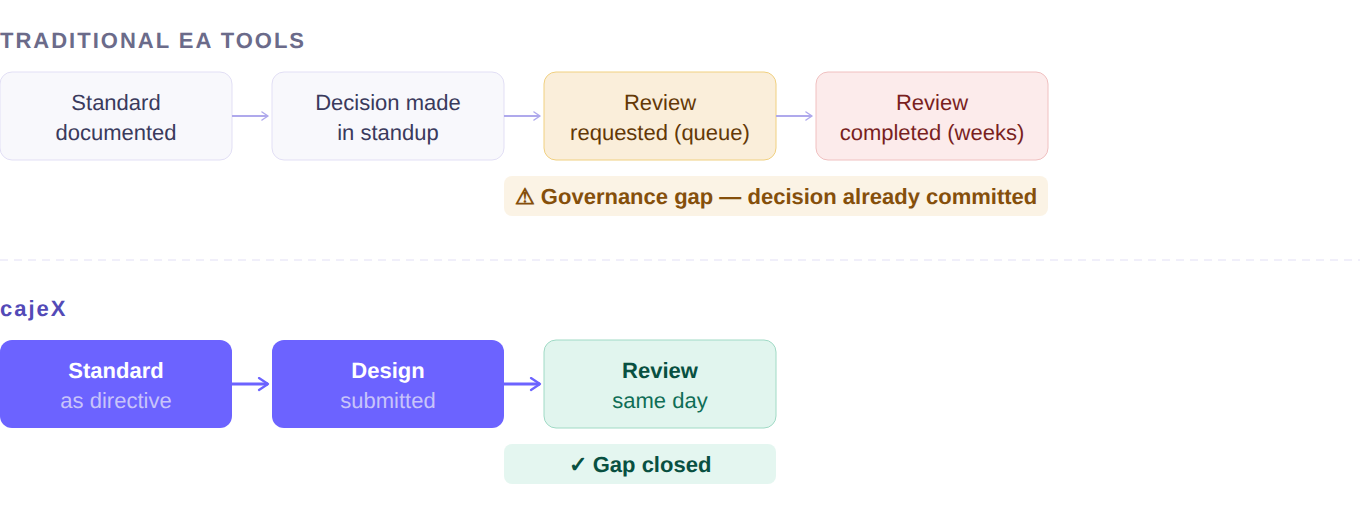
Figure 2 — The governance gap. cajeX closes it by moving review to the moment a decision is being shaped.
This is the structural problem cajeX was built to address. Not by replacing the portfolio visibility that EA tools provide, but by enforcing the standards they represent — at the exact moment a design, procurement, or technology decision is being made.
What cajeX Does Differently
cajeX starts from the same raw material as traditional EA tools — your standards, policies, and architecture knowledge — but converts them into a different kind of asset: architecture directives. Not documents. Governed objects with version histories, approval records, and effective dates. Rules written clearly enough that an AI co-worker can validate a submission against them and produce a finding mapped to a specific directive.
AI-powered review against your own standards
Every project, solution design, or procurement submission is evaluated against your full active directive set — in minutes, not weeks. Findings are classified by severity (Critical, High, Medium, Low) and by type (Nonconformity, Observation, Opportunity, Risk). Every finding links back to the specific directive it relates to. No black box, no unexplained flags.
Directive enforcement, not documentation
Traditional EA tools store a standard. cajeX enforces it — applying it automatically at review time, consistently, regardless of which architect happens to be available and regardless of whether the decision involves software delivery, a vendor contract, or a business case.
Full audit trail from standard to decision
Every finding is traceable. Every accepted risk is recorded. Every approved directive is version-controlled. When a regulator or auditor asks what was reviewed and what was found, the evidence is already there — built session by session, not assembled under deadline pressure.
Self-service review at the idea phase
Teams can run a review themselves during business case development, vendor evaluation, or solution design — before any commitment is made. Routine findings are cleared directly. Critical findings — those with material impact on technical debt or strategic alignment — are escalated to the architects who need to weigh in.
Transparent pricing
Most traditional EA platforms require a sales conversation before you can see a number. cajeX publishes pricing for all self-serve plans at cajex.ai/pricing. You know what you are paying before you sign up.
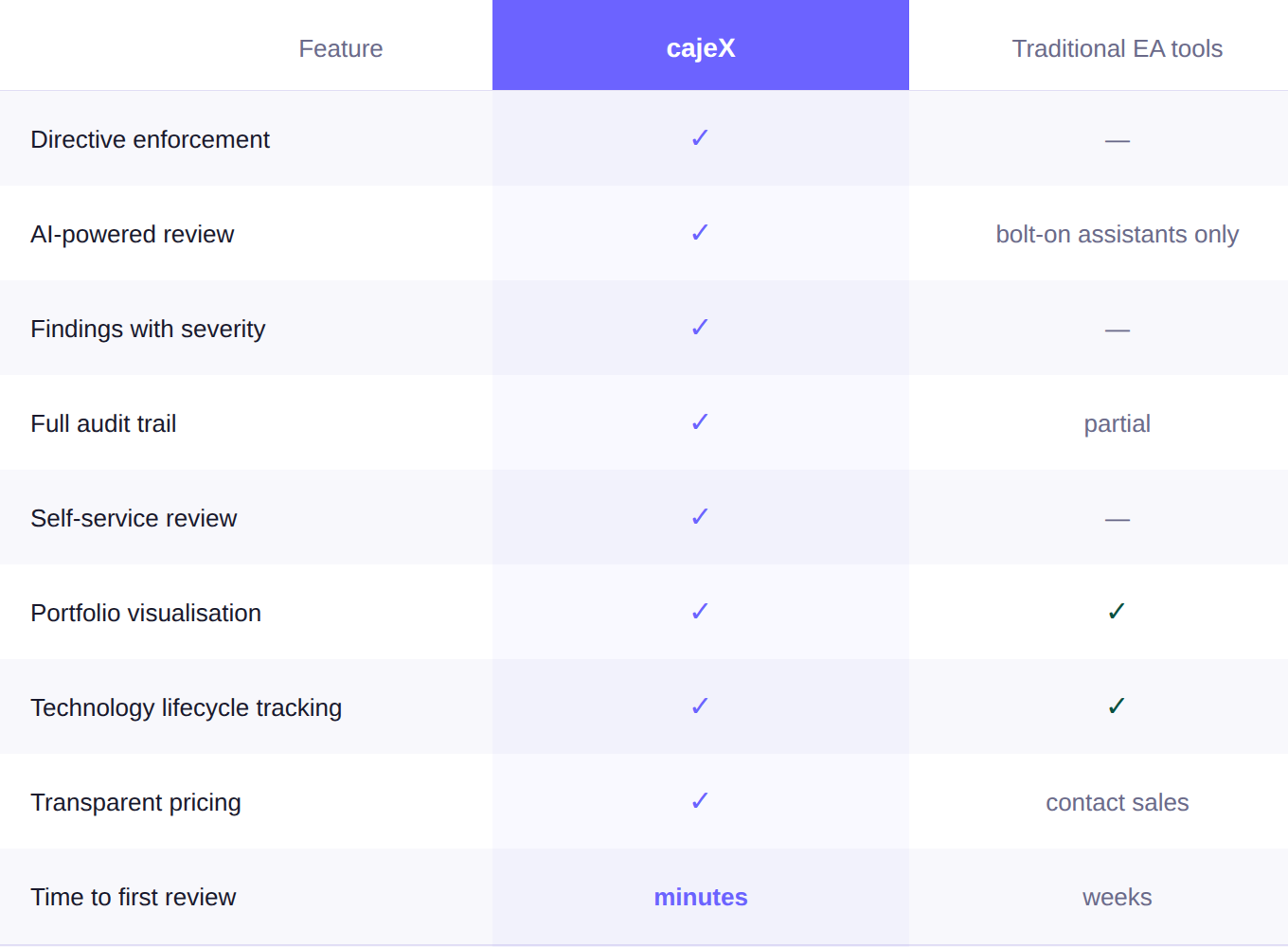
Figure 3 — cajeX versus traditional EA tools. For the full capability breakdown across seven dimensions, get the cajeX Buyer's Guide.
Two Tools, One Architecture Practice
The practical question for most teams is not "cajeX or LeanIX" — it is "what do I use each for?" The answer is straightforward: use your existing EA platform for what it does well. Portfolio visibility, technology lifecycle management, capability mapping, application rationalisation — these are solved problems, and the established tools solve them well.
cajeX sits alongside them as the governance enforcement layer: the mechanism that checks whether what is being built and procured actually complies with the standards your portfolio represents.
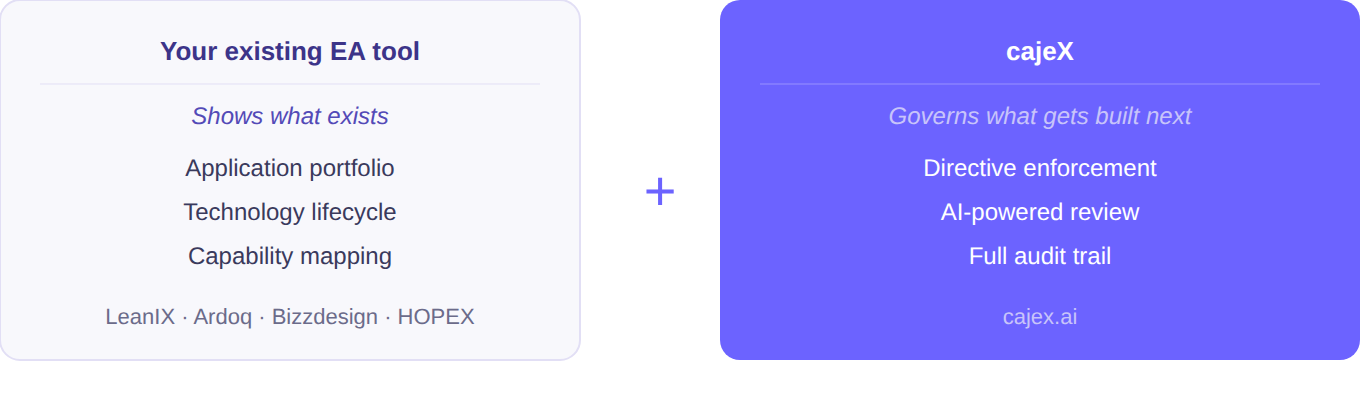
Figure 4 — Your EA platform maps the landscape. cajeX enforces what happens next.
Your EA platform shows you what exists. cajeX governs what gets built next. Together, they give you an architecture practice that can both see clearly and act consistently — documentation and enforcement as a single, integrated function rather than two things that exist independently and hope the other one works.
For a full capability comparison across seven dimensions, the cajeX Buyer's Guide covers the detail.